Newsletter no. 8

Nature-based Solutions for Demonstrating Climate-Resilient Critical Infrastructure

We're excited to bring you the latest news and progress from the NATURE-DEMO Project: Nature-Based Solutions for Climate-Resilient Infrastructure

Our May 2026 newsletter is packed with updates on our efforts to advance nature-based solutions (NbS) for critical infrastructure. As the NATURE-DEMO project reaches its two-year milestone, we reflect on a period of intense collaboration and scientific innovation. With the successful completion of the first three Work Packages (WPs) on April 30th, the project has transitioned from a phase of digital and conceptual framework development into the real-world deployment phase.

Here's a glimpse of what's inside:


BOKU University - Research Contribution to NATURE-DEMO
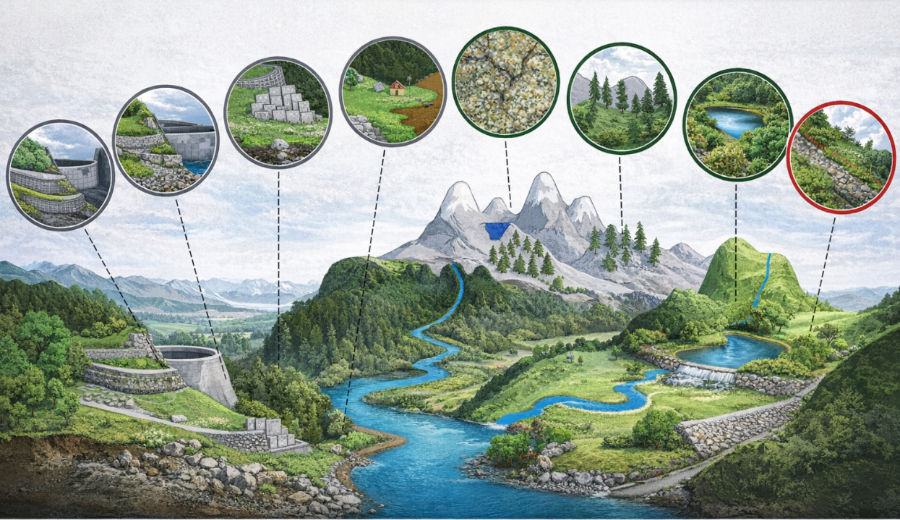
BOKU Spotlight

The need for sustainable, resilient protection of our critical infrastructure has never been more pressing. BOKU University (IAN, IBLB and IKI), leads the way in integrating structural engineering with nature's dynamic adaptability. This newsletter highlights the scientific foundations laid by our teams. By showcasing that nature-based solutions (NbS) can be evaluated with the same rigour as steel and concrete, BOKU provides the foundations necessary for a green transition in infrastructure protection.

Our Highlights:

  • BOKU Research Contribution to NATURE-DEMO 
  • Innovative Design Concepts for Critical Infrastructures: Nature-Based Solutions and Natural Hazard Mitigation
  • Bridging the Gap from Grey to Green in Teaching: A New Focus on NbS within the HADRIAN Doctoral School
  • Training the Next Generation of NbS Practitioners 
  • Transferring and Evolving established Infrastructure Inspection and Maintenance Procedures to NbS and Hybrid-Systems 
  • Highlights from EGU
  • Meet Christian Scheidl – the New Professor for Alpine Natural Hazards
  • About BOKU – LAWI: Many Institutes, One Goal

BOKU Research Contribution to NATURE-DEMO

BOKU University’s new analytical framework evaluates the protective capacity of NbS against climate hazards in alpine regions. This methodology simplifies complex scientific typologies into 29 actionable hazard types, explicitly filtering for processes where living systems can influence trigger mechanisms or ongoing hazard processes. A core innovation are the dynamic Hazard Profiles, which evaluate NbS effectiveness across four functional phases: from pre-event predisposition and trigger prevention to active process mitigation and post-event resilience. 

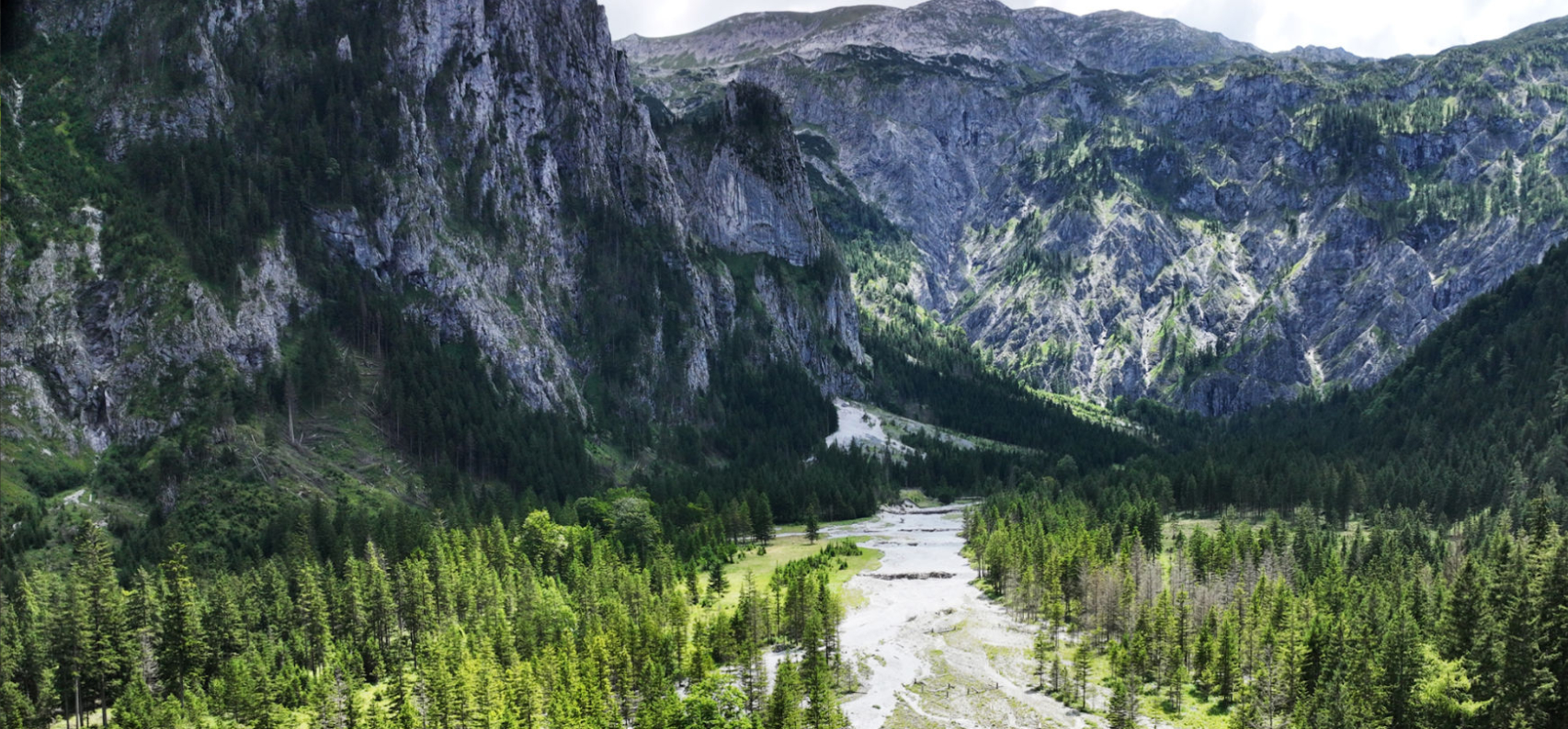
Building on this foundational work, BOKU-IKI (Institute for Structural Engineering) has extended the RAMSSHEEP framework to bridge the gap between ecosystem services and engineering standards. Adapted to include natural hazard impacts and NbS indicators, this tool now allows infrastructure managers to simulate the performance of hybrid "grey-green" strategies, such as combining traditional check dams with soil bioengineering. This approach addresses the "standardisation void" by providing objective assessments that balance technical safety with environmental and socio-political priorities. Grounded in real-world demonstration sites like the Brunntal valley, BOKU’s digital tools provide credible hazard and risk estimates needed for prioritising nature-based interventions. 
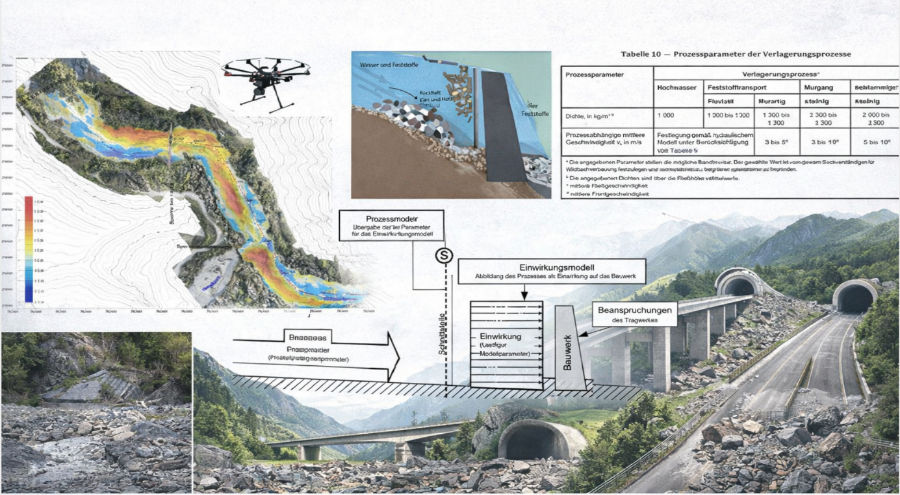
 

Bridging the Gap from Grey to Green in Teaching: New Focus on NbS within HADRIAN Doctoral School (BOKU, IKI)

The HADRIAN Doctoral School at BOKU University, Institute for Structural Engineering (IKI), focuses on alpine hazards and the vulnerability of critical infrastructure like transport, energy, and water systems. Historically rooted in studying avalanches, rockfalls, and debris flows, the school is now expanding to bridge the gap between conventional geosciences and engineering, addressing the complex interactions between mountain hazard processes and societal and economic functions.

A significant part of this growth is a new focus on Nature-based Solutions. Driven largely by the NATURE-DEMO project, this new focus represents a paradigm shift from deterministic engineering towards adaptive, risk-based approaches that complement traditional "grey" infrastructure with NbS. By blending ecology and civil engineering, HADRIAN is shaping a future-oriented educational environment that utilises data-driven models and monitoring to enhance the resilience of critical systems against global change. 

Training the next generation of NbS practitioners: BOKU Students Gain Hands-On Experience with Nature-Based Solutions

The BOKU Institute of Soil Bioengineering and Landscape Construction (IBLB) recently transformed the Veitschbach tributary into a "living laboratory" during a four-day field course in St. Barbara im Mürztal. Guided by Prof. Dr Rosemarie Stangl and supported by expert machinery operators from the FAST Pichl forestry centre, students were able to implement diverse Soil and Water Bioengineering (SWB) measures—including live cribwalls, live fascines, live stakes, brush mattresses, and wattle fences—to protect local agricultural land from flooding. Each technique demonstrates how root systems and woody structures stabilise riverbanks, manage water flow, and mitigate erosion. The students learned how living, nature-based solutions grow more resilient over time. It was a successful week of learning, collaboration, and impactful engineering that left everyone inspired by the technical possibilities of working in harmony with nature.

Implementation of a live cribwall with live stakes being merrily hammered in and around.

Implementation of a wattle fence.

While most parts of NbS and SWB are installed by hand, an excavator is an irreplaceable instrument on the construction site. Here the excavator is swarmed by students, tutors and lecturers alike, to enable a great photoshoot session.

Next, the students, tutors and lecturers alike moved on to pose in the ditch. A great photoshooting session indeed.

Transferring and Evolving Established Infrastructure Inspection and Maintenance Procedures to NbS and Hybrid Systems

Integrating Nature-based Solutions (NbS) into critical infrastructure management relies on the transferability of established engineering standards, such as the Austrian RVS guidelines. By utilising these guidelines as a "technical spine," the NATURE-DEMO project ensures that biological and hybrid systems are governed by the same quality assurance principles—such as Qualitätssicherung bauliche Erhaltung—that are used for conventional grey assets. This transfer of established technical terminology, such as expert findings (Befund), durability (Dauerhaftigkeit), and functionality (Funktionstüchtigkeit), allows NbS to be seamlessly and professionally integrated into national infrastructure databases and existing management software. 

Evolving these procedures for hybrid systems necessitates a dual-management strategy that maintains both non-living technical hardware and living biological components. While established guidelines provide the framework for structural integrity and corrosion protection, they must be adapted to accommodate the dynamic, seasonal nature of ecosystems. This evolution facilitates a paradigm shift from reactive, time-based maintenance toward predictive, adaptive management, where 30cm-resolution digital twin data inform the maintenance state in real-time. By embedding ecological health markers into evolved inspection routines, the project bridges the "implementation gap," transforming NbS from isolated pilot trials into standardised, bankable infrastructure components aligned with European policy frameworks.

Highlights from EGU

From May 4th to 8th, the NATURE-DEMO team joined thousands of scientists in Vienna for the EGU General Assembly 2026, marking a week of intensive knowledge exchange and successful networking. Contributions from BOKU included oral and poster presentations. Dipl.-Ing. Erik Kuschel (BOKU IAN) delivered a standout oral presentation on his and Dr Michael Obriejetan’s paper “A Systematic Framework for Assessing the Temporally Variable Protective Capacity of Nature-Based Solutions Against Natural Hazards”. The presentation drew a full house, leading to a vibrant Q&A session and numerous follow-up discussions, yielding potentially fruitful connections in the field.

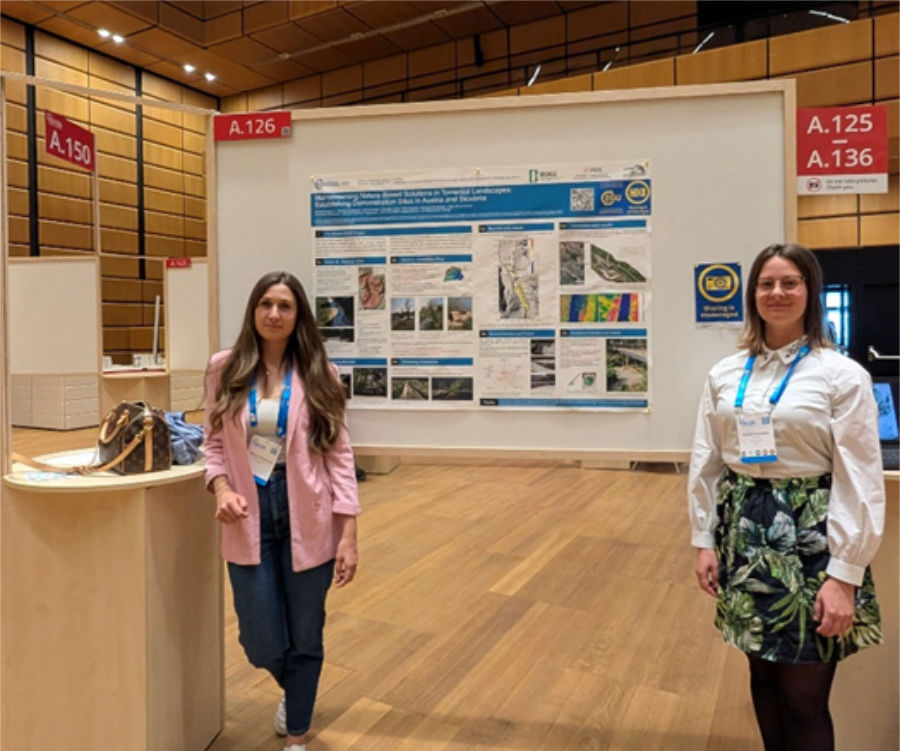
The poster sessions were equally engaging: PhD student Helinä Poutamo (BOKU IBLB) and Dr Tamara Kuzmanić (University of Ljubljana) presented their work “Mainstreaming Nature-Based Solutions in Torrential Landscapes: Establishing Demonstration Sites in Austria and Slovenia”, while Master’s student Peter Tisch (BOKU IBLB) successfully showcased his master’s thesis work “Quantifying the Protective Capacity of Nature-based Solutions: a Scalable Framework based on Multi-Decadal Data at the Gschliefgraben Landslide (Austria)". Both posters attracted a very interested crowd, flowing discussions and sharp questions. 

Dipl.-Ing. Erik Kuschel in his element, giving an engaging oral presentation.

Beyond the formal sessions, we were excited to discover the NBRACER project, an EU-funded initiative focusing on NbS in the Atlantic region. While our geographical focuses differ, our concepts and methodologies regarding nature-based resilience are highly aligned. This encounter opens the door for potential future collaborations and shared knowledge. Ultimately, we return from Vienna inspired by the positive feedback and the growing momentum for Nature-based Solutions in natural hazard management.

About BOKU – LAWI: Many Institutes, One Goal

The Department of Landscape, Water and Infrastructure (BOKU – LAWI) integrates expertise across 17 institutes, working towards a common goal of developing sustainable solutions for natural hazards and resilient infrastructure systems.

Dr. Tamara Kuzmanic and PhD student Helinä Poutamo presenting their Poster of two NatureDEMO Demonstration Sites.

Master student Peter Tisch presenting his Master's thesis about Gschliefgraben.

Meet Christian Scheidl – the new professor for Alpine Natural Hazards

I am Univ. Prof. Christian Scheidl, University Professor for Natural Hazards and Risk Management and head of the Institute for Alpine Natural Hazards. My mission is to advance interdisciplinary research, deliver excellent teaching, and translate scientific insights into practice—positioning our institute as a national and international leader. My work spans the full spectrum of alpine hazards—from floods and debris flows to rockfalls and avalanches. By integrating ecological and engineering perspectives, my team and I develop science-based solutions for integrated risk management, with a core focus on quantifying how forests and natural systems can protect our communities in a changing climate.

Outputs and Exploitation of WP1

From theory to practice, integrating the NATURE-DEMO methodological framework to the Digital Support Tool

The Digital Support Tool (DST) Platform, developed as part of the NATURE-DEMO Project, supports users in identifying the most appropriate interventions for a specific site.

The Hazard-NbS Matrix (NATURE-DEMO Project, Nature-based Solution Catalogue) is incorporated into the Digital Support Tool, enabling the pre-selection of NbS solutions to attenuate the climate hazards identified at the site, such as landslides, flooding, or wildfires.

The suitability and feasibility framework is integrated into the DST to assess the viability of different proposals through a multi-criteria analysis. It integrates Site-Specific Feasibility (SSF) and Socio-Economic and Institutional (SEI) factors, ensuring that recommendations align with topography, demographics, soil/ water characteristics, local land-use constraints, regulatory frameworks, and social acceptance.

Advanced assessment based on the integration of the Suitability Index

The DST integrates the Suitability Index (SI) to weight technical efficacy alongside implementation costs, timeframes, and environmental impacts. By correlating this index with the Potential Risk Index (PRI), the tool provides infrastructure managers with an evaluation of the proposed solutions.

The tool aims to inform users in the first stage of site analysis and NbS selection for critical infrastructure protection, providing advanced or customised features depending on their expertise and technical profile, and is open to a broad range of stakeholders, including infrastructure managers, climate experts, policy-makers, and non-expert audiences. 

Explore the tool now: nature-demo-dst.dic-cloudmate.eu


Outputs and Exploitation of WP2

Risk Assessment and Decision Support Tool

Over the past months, WP2 has completed the technical chain that turns the project's climate-risk methodology into a working online tool that infrastructure managers and planners can use today.

The main output of WP2 is the Decision Support Tool (DST), a public-facing platform that puts the risk-assessment methodology in the hands of infrastructure managers.

Two of the three assessment levels are live: a qualitative risk-perception step (Level 1) that compares infrastructure condition under four scenarios including grey protective infrastructure, and a semi-quantitative pre-screening step (Level 2) that combines hazard change, asset exposure and asset vulnerability into a single Potential Risk Index, ranks NbS adaptation options by residual risk through a Multi-Criteria Analysis, and shows how much risk remains after each option.

Twelve infrastructure types are supported (roads, railways, bridges, tunnels, dams, river training infrastructure, torrent control infrastructure, urban green spaces, buildings, energy infrastructures, industrial buildings, water infrastructure), in both a generic *any-European-location* workflow and a guided workflow tailored to the project's demonstrator sites.

Backing the DST, two further open-source software components developed inside WP2 are also now released and publicly available.

“clima-data” is a processing pipeline that takes raw EURO-CORDEX climate model output and converts it into **23 ready-to-use climate indicators**.

The indicators cover the four hazard families that matter most for critical infrastructure (temperature, precipitation, wind, snow), together with three indicators specifically aimed at green infrastructure (solar radiation at the plant level, plant-stress days, agricultural drought).

Both the moderate-emission (RCP4.5) and the high-emission (RCP8.5) scenarios are supported, from the 1981–2010 reference period to the end of the century, with model-ensemble uncertainty bands.

“clima-ind-viz” is an interactive web application that lets any user search a European city and explore those 23 indicators on the fly, comparing the historical baseline against short-, mid- and long-term projections under both scenarios.

The same data is also reachable through a public web interface (JSON API), so partner tools and downstream applications can pull the indicators directly.

Key Outcomes. The DST is now public, with a full online manual, a downloadable PDF user guide and reproducible code repositories.

It is ready for hands-on use by the five NATURE-DEMO demonstrators (six site configurations) and by external infrastructure owners interested in piloting the methodology.

WP2 integration within the overall project framework

  • WP1 (Catalogue of Nature-based Solutions). The 74 NbS types and the suitability-scoring criteria produced by WP1 are embedded directly into the DST and surfaced to the user at the adaptation step.
  • Demonstrator activities. The site-specific workflow is pre-configured for the project's demonstrators and feeds the partners' adaptation planning.
  • Dissemination and exploitation. The open repositories, the live web tool and the public API provide a tangible exploitation pathway and have already been used as a basis for stakeholder demonstrations.

*** All software, documentation, and the DST itself are available through the project's GitHub organisation (github.com/NATURE-DEMO).

Outputs and Exploitation of WP3

From conceptual design to implementation-ready Living Labs

Work Package 3 reached an important milestone, marking the transition from preparatory work to implementation-ready Living Labs. Under the coordination of TUZVO, WP3 translated the methodological outcomes of WP1 and WP2 into practical, site-specific frameworks for testing Nature-based Solutions (NbS) across the five NATURE-DEMO demonstration contexts: Austria, Romania, Slovenia, Slovakia, and North Macedonia.

The main WP3 outputs provide a coherent basis for the next project phase. The conceptual design of the demonstrators defines baseline conditions, relevant climate-related hazards, exposed infrastructure elements, proposed NbS types and expected resilience benefits. The Living Labs address a broad range of risks, including floods, landslides, erosion, heat stress, sediment transport, and compound hydro-meteorological hazards.

A structured KPI framework was also developed to support future monitoring of NbS effectiveness. It combines cross-site indicators with site-specific metrics and covers technical, environmental, socio-economic and governance dimensions. This will allow the project to assess not only risk-reduction effects, but also wider benefits such as improved soil stability, vegetation performance, water regulation, ecosystem resilience, and stakeholder uptake.

WP3 further contributed to implementation readiness through the Public Procurement Strategy, which maps key regulatory, permitting and procurement requirements relevant to NbS deployment. This output helps demonstrator partners move from design to execution and offers lessons for replication in other European contexts.

Together, the WP3 outputs form a practical bridge between NbS design, monitoring, procurement, and future implementation in WP4. They also provide a strong exploitation basis for replication, policy learning, and the integration of NbS into climate-resilient infrastructure planning.”

Monitoring temperatures at DEMO-SITE 3

Nature-based Solutions (NbS) deliver a range of ecosystem services. For certain NbS types, these include micro-climate and temperature regulation. By tracking air, soil, and surface temperatures, we can demonstrate how ecosystems such as forests, wetlands, or urban green spaces reduce heat, buffer extreme weather, and create more stable microclimates.

At DEMO-SITE 3 (Gradaščica River, Ljubljana), riparian plants shade the water and surrounding surfaces, reducing direct solar heating and keeping temperatures cooler and more stable. The water-shading and cooling effect is critical for maintaining oxygen levels and supporting aquatic habitats. Within the scope of WP4, multiple temperature-measuring techniques will be deployed at DEMO-SITE 3 to assess the influence of vegetation shading on water and surrounding temperatures; these include drone-based thermal surveys, multiparametric sondes (with temperature sensors), and compact, button-type loggers.

Drone surveys provide high-resolution spatial maps of surface temperature, making them ideal for identifying shaded versus exposed river sections. However, they are limited to surface data, depend on weather conditions, and require technical expertise. Multiparametric sondes enable continuous, in-situ monitoring, offering accurate time-series data, but are typically fixed in one location (point measurement). In contrast, small button-type sensors are low-cost, easy to deploy across multiple locations, and useful for spatially distributed monitoring, though they are susceptible to being lost or damaged in water systems.

By combining these three techniques, the site will generate a comprehensive dataset linking vegetation cover to thermal conditions in the water and the surrounding area. The data obtained will help quantify the ecosystem services provided by vegetation.

Preliminary results of a UAV temperature survey at the Gradaščica River, carried out in July 2025.

Planned locations for the deployment of button-type temperature sensors at the Gradaščica River.

Launch of WP4 – Introduction and Planned Outputs

In May 2026, NATURE-DEMO officially launched WP4 (Deploy and demonstrate regional nature-based solutions), led by BOKU. This work package represents the "Validate" stage of our project lifecycle, where theoretical designs are translated into physical infrastructure across five regional demonstrators.

Detailed aspects of the WP4 launch include:

  • Demonstrators’ deployment: While the first two years focused on building the digital decision support platform and cataloguing NbS, the launch of WP4 marks the transition to the physical construction and implementation of these solutions. This includes the full-scale deployment of NbS, from gabion walls in the Brunntal (Austria) and native-species urban greening in Brasov (Romania). This phase marks the shift from conceptual design to full-scale implementation of NbS aimed at protecting critical infrastructure against hazards such as floods, landslides, and wildfires.
  • Advanced Monitoring: The launch triggers the implementation of a comprehensive monitoring framework led by CATEC. Utilising a multi-modal observation network—including UAVs (drones), satellite imagery, and IoT sensors, to monitor NbS evolution and resilience impact in real-time;
  • Expert Panel Exchange: Establishing a monthly scientific exchange between demonstrator leads to ensure the rapid transfer of findings and lessons learned across different sites.
  • Training phases: To ensure long-term maintenance and sustainability of the deployed solutions at the local demonstrators, as well as a proper upkeep of these nature-based assets, WP4 launches Task 4.3. This task focuses on 1–2-day training sessions for local personnel. Led by ANRI, it begins with a skills assessment to identify knowledge gaps, followed by the co-development of operation manuals (D4.1) in collaboration with the site managers.
  • Planned Outputs: Co-developed operation manuals (D4.1) and the final evaluation of demonstrator results (D4.2)

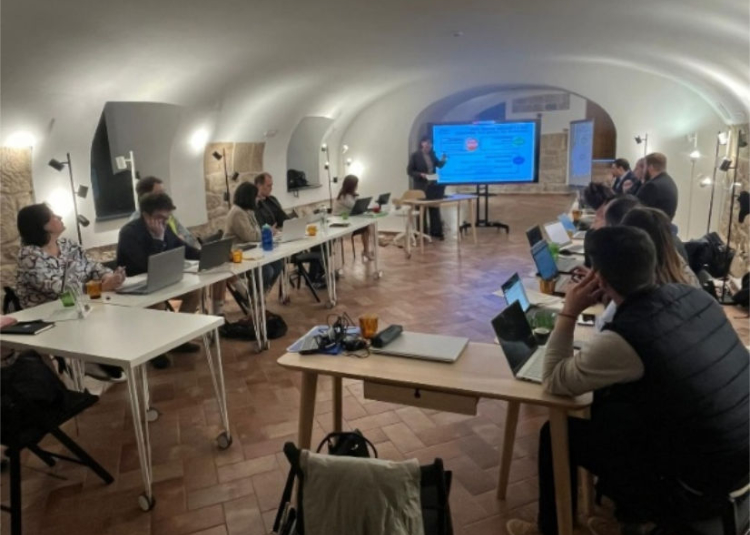
Consortium Meeting, 18-20 May 2026, Brasov, Romania

The NATURE-DEMO project continues to make strong progress, and the Consortium Meeting held in Brasov on 18-20 May 2026 and hosted by Transilvania University of Brasov (UTBV) provided partners with the opportunity to review achievements, address current challenges, and define the next phases of implementation and mainstreaming of the NbS. The midterm meeting gave the opportunity to review the transition to WP4 and to visit the Demo2 sites across the city, showcasing climate-resilient urban green interventions based on native plant species.

During the discussions, partners reviewed the project’s progress over the first two years and the corresponding outputs covering research activities, the development of digital tools, planning and implementation activities at DEMO sites, and the strengthening of communication strategies. The importance of collaboration and an integrated approach to NbS development was reaffirmed as key to project success.

The meeting marked the midterm of our project, corresponding to the completion of WP1, WP2, and WP3, and the transition into WP4, focused on deployment and demonstration of the NbS. With methodologies and digital tools now in place, NATURE-DEMO is entering a decisive phase centred on real-world deployment, stakeholder engagement, and impact at both regional and European levels.

NATURE-DEMO Consortium Meeting in Brasov, Romania, 18-20 May 2026

Recent Dissemination events from our partners

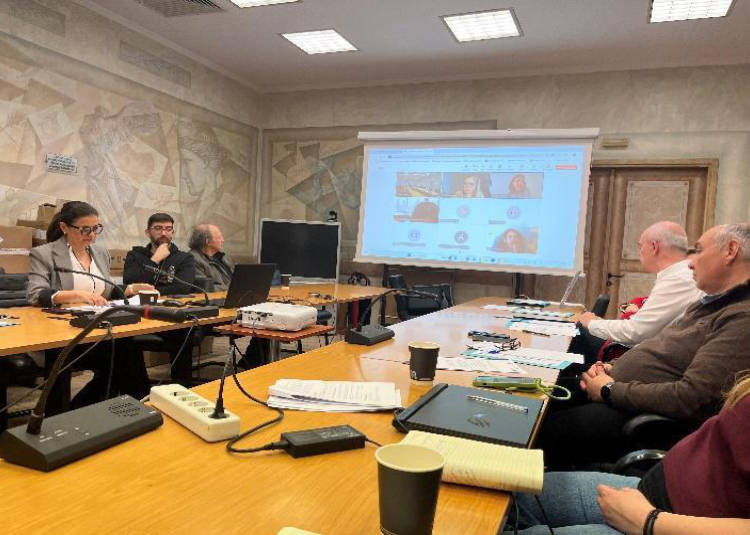
PAMT Contribution: As part of dissemination activities and as a partner in the NATURE-DEMO project, PAMT participated in a Stakeholder Meeting (organised within the framework of the RESIST project) held by the Region of Eastern Macedonia and Thrace on Friday, 27 March 2026.

The meeting included:

  • Presentations of projects and Nature-Based Solutions (NBS) interventions implemented in the Region, with emphasis on both their outcomes and the associated administrative and institutional challenges.
  • Thematic workshops, during which participants were divided into working groups to examine specific issues, such as existing legislative frameworks, administrative barriers, permitting procedures, funding instruments, and the need for institutional adjustments, in line with the scope of the project.

In addition, a welcome address was delivered by the EU Mission. The event was conducted primarily in Greek and, consequently, most presentations were delivered in the Greek language.

The objective of the process was to develop a well-documented Policy Paper, including concrete proposals to improve the institutional and administrative framework, to be submitted to the Ministry of Environment and Energy and the competent ministries.

Further reading

NATURE-DEMO Partners

Stay tuned!

Scroll to top