
Our partner, Propark Foundation for Protected Areas (PPK), recently hosted a successful stakeholder consultation meeting for the NATURE-DEMO Demo2 site in Brașov, Romania. This event was a crucial part of our engagement process (WP3, Task 3.2), dedicated to devising our Living Labs and co-designing effective nature-based solutions (NbS).
Event Highlights
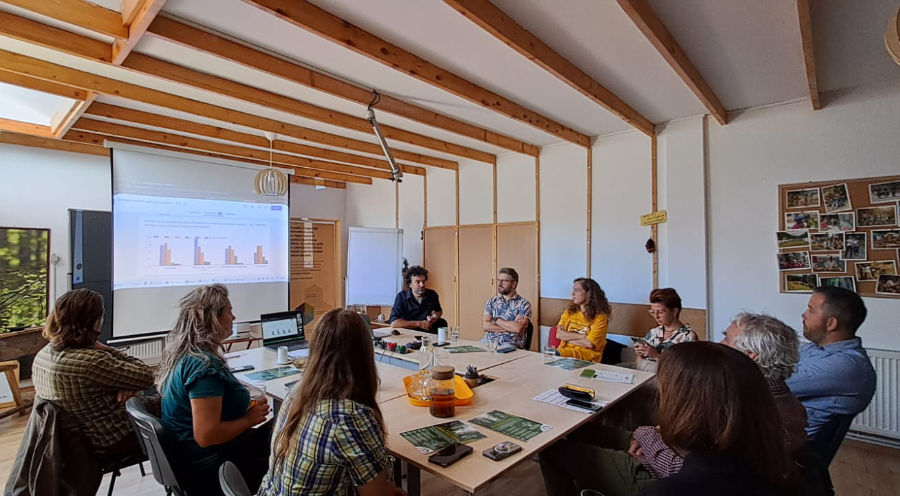
The Stakeholder Consultation Meeting took place on August 27, 2025, in a hybrid format, accommodating participants both at the PPK headquarters in Brașov and online via Zoom.
PPK invited 28 institutions to the consultation, and we are proud to report a high level of engagement with 22 institutions present (10 attendees physically and 12 online). Attendees represented a diverse and vital mix of stakeholders, including:
- Local, regional, and national authorities
- Environmental NGOs
- Landscaping companies
- The Romanian Architects' Association
- The National Forest Administration of Romania, and others.
Focus on Responsible Green Spaces
Propark representatives opened the session with a presentation on the NATURE-DEMO project's objectives, expected results, and the specific role and activities of Propark within the project.
The meeting quickly moved into a professional debate centered on the topics of responsible green spacesand the adoption of nature-based solutions in urban green infrastructure (UGI). Participants were asked to fill out a questionnaire specifically related to the Demo2 site.

Invaluable Outcomes
The session concluded with a discussion of the questionnaire results. This collective feedback successfully identified key strengths, weaknesses, opportunities, and risks related to the future implementation of NbS within the Brașov UGI.
This co-creation process ensures that the nature-based solutions being developed by the NATURE-DEMOproject are locally relevant, scientifically sound, and supported by the community, ultimately enhancing the long-term climate resilience of Brașov's critical infrastructure.
We thank all participants for their time and valuable input, which is essential to the success of our Demo2 Living Lab.
Related
-
NATURE-DEMO Newsletter no. 9
Stay updated on how NATURE-DEMO is strengthening European infrastructure resilience against climate hazards. Explore our latest quarterly newsletters to discover key project milestones, field implementation updates across our demo sites, newly published scientific research, and upcoming events.
-
NATURE-DEMO Featured in ETR Journal: Nature-Based Solutions for Climate-Resilient Rail Infrastructure
The presentation highlighted how the catalogue can support the identification, selection, and implementation of NbS for climate resilience, sustainable infrastructure, and adaptation to natural hazards. It also provided an opportunity to discuss how NbS can be transferred into practical applications across different environments and communities.
-
NATURE-DEMO Research Highlighted at Sustainable Solid Waste Management Conference
The presentation highlighted how the catalogue can support the identification, selection, and implementation of NbS for climate resilience, sustainable infrastructure, and adaptation to natural hazards. It also provided an opportunity to discuss how NbS can be transferred into practical applications across different environments and communities.
-
NATURE-DEMO Dissemination at ICONHIC 2026 in Greece
The presentation highlighted how the catalogue can support the identification, selection, and implementation of NbS for climate resilience, sustainable infrastructure, and adaptation to natural hazards. It also provided an opportunity to discuss how NbS can be transferred into practical applications across different environments and communities.
-
NATURE-DEMO NbS Catalogue Presented at the University of Huddersfield
The presentation highlighted how the catalogue can support the identification, selection, and implementation of NbS for climate resilience, sustainable infrastructure, and adaptation to natural hazards. It also provided an opportunity to discuss how NbS can be transferred into practical applications across different environments and communities.