
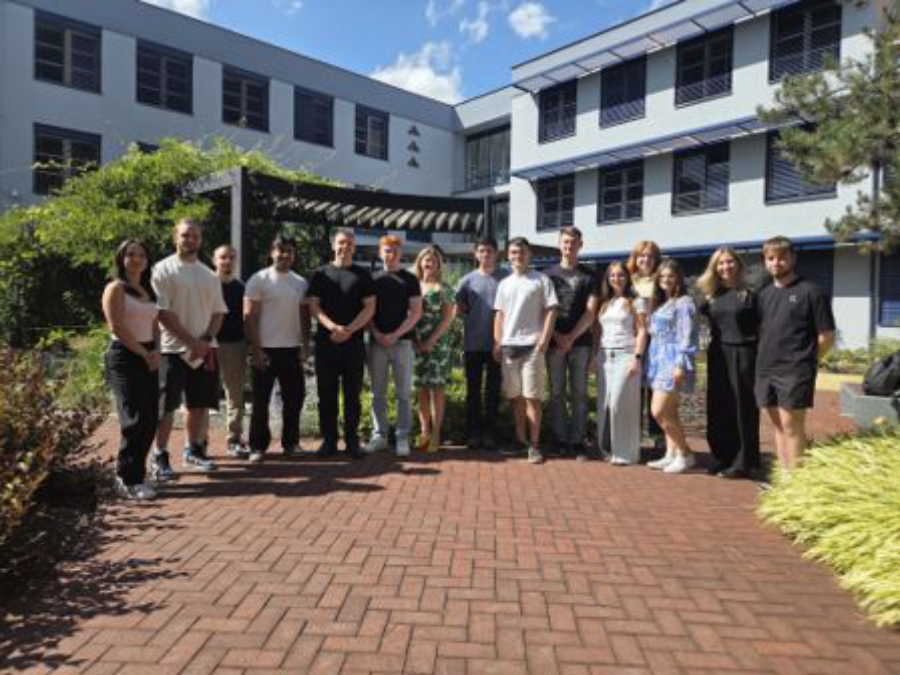
rom August 24 to 28, 2026, the Faculty of Safety Engineering at VŠB – Technical University of Ostrava (Czech Republic) hosted the Erasmus+ Blended Intensive Programme (BIP) International Summer School on Climate-Resilient Critical Infrastructure (CRESC).
Organized in partnership with the Technical University in Zvolen (Slovakia) and the Pomeranian University in Słupsk (Poland), the summer school brought together students, researchers, and experts to explore cutting-edge approaches to infrastructure protection and climate adaptation.
Bridging Academic Training and Horizon Europe Research
The CRESC program was closely linked with ongoing Horizon Europe research initiatives, including the NATURE-DEMO and CESAR projects, both focused on enhancing infrastructure resilience against extreme natural events.
Participants engaged in a blended learning format that combined a virtual preparatory session on August 18 with an intensive 5-day on-site mobility week in Ostrava. The curriculum addressed several key domains:
-
Core Analytical Domains: Advanced risk assessment methodologies, system dynamics, and complexity analysis for critical infrastructure systems.
-
Nature-Based Solutions (NBS): The application and integration of NBS as primary tools for climate adaptation and long-term asset protection.
-
Low-Carbon Transition: Sustainability frameworks for low-carbon fuels and energy infrastructure.
Hands-On Simulation at CESIT
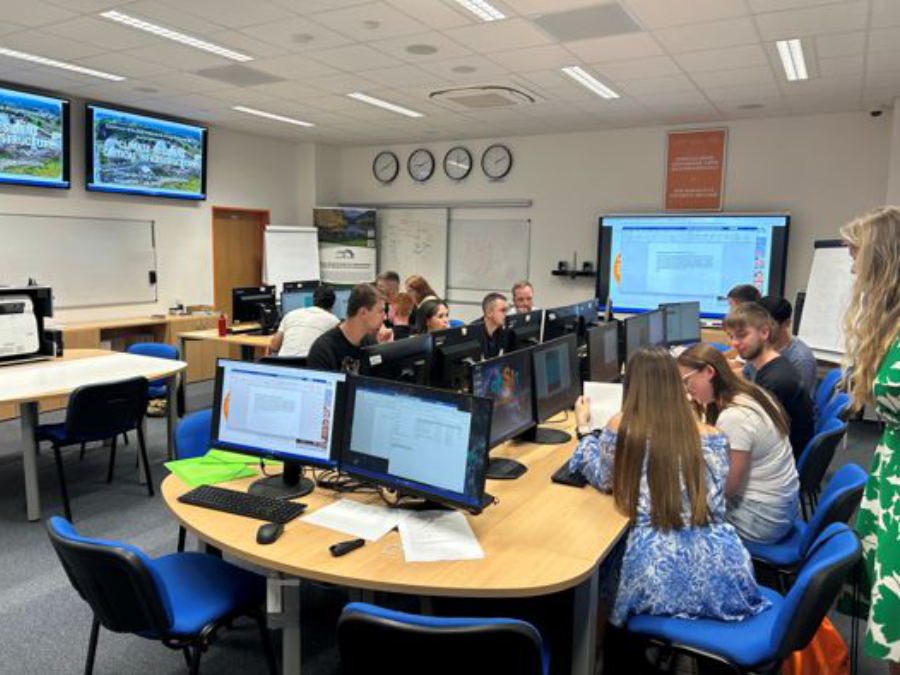
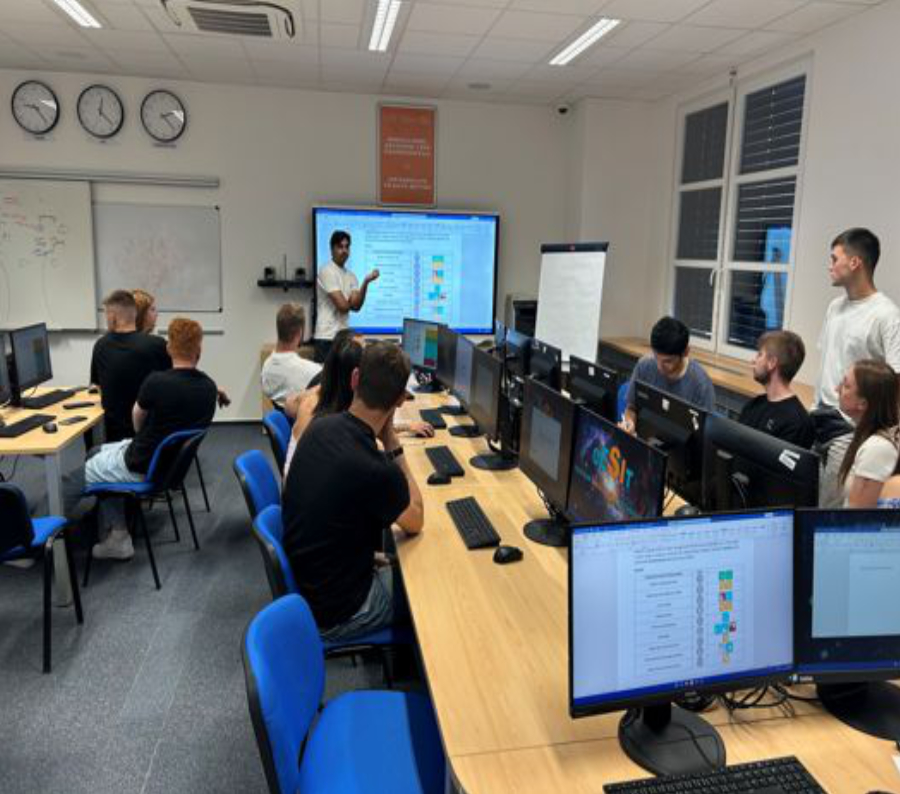
A major highlight of the physical mobility week was practical training conducted at the CESIT facilities. Students collaborated on interdisciplinary team projects and participated in emergency simulation exercises utilizing state-of-the-art virtual and augmented reality (VR/AR) tools.
By connecting European research projects like NATURE-DEMO with academic programs, the CRESC Summer School helped train the next generation of engineers and risk managers in deploying nature-based solutions alongside advanced simulation technologies.
Related
-
NATURE-DEMO Featured at Tag der Schiene 2026 by DZSF
On September 19–20, 2026, the German Centre for Rail Traffic Research at the Federal Railway Authority (DZSF) represented the NATURE-DEMO project during Tag der Schiene 2026 (Railway Day), a major public outreach event dedicated to the future of rail transport.
-
NATURE-DEMO Newsletter no. 9
Stay updated on how NATURE-DEMO is strengthening European infrastructure resilience against climate hazards. Explore our latest quarterly newsletters to discover key project milestones, field implementation updates across our demo sites, newly published scientific research, and upcoming events.
-
NATURE-DEMO Featured in ETR Journal: Nature-Based Solutions for Climate-Resilient Rail Infrastructure
The presentation highlighted how the catalogue can support the identification, selection, and implementation of NbS for climate resilience, sustainable infrastructure, and adaptation to natural hazards. It also provided an opportunity to discuss how NbS can be transferred into practical applications across different environments and communities.
-
NATURE-DEMO Research Highlighted at Sustainable Solid Waste Management Conference
The presentation highlighted how the catalogue can support the identification, selection, and implementation of NbS for climate resilience, sustainable infrastructure, and adaptation to natural hazards. It also provided an opportunity to discuss how NbS can be transferred into practical applications across different environments and communities.
-
NATURE-DEMO Dissemination at ICONHIC 2026 in Greece
The presentation highlighted how the catalogue can support the identification, selection, and implementation of NbS for climate resilience, sustainable infrastructure, and adaptation to natural hazards. It also provided an opportunity to discuss how NbS can be transferred into practical applications across different environments and communities.