
At NATURE-DEMO, we believe that the future of resilient infrastructure lies in the hands of today’s students. We are thrilled to share that last week, on Tuesday, January 6th, the NATURE-DEMO project took center stage in the classroom!
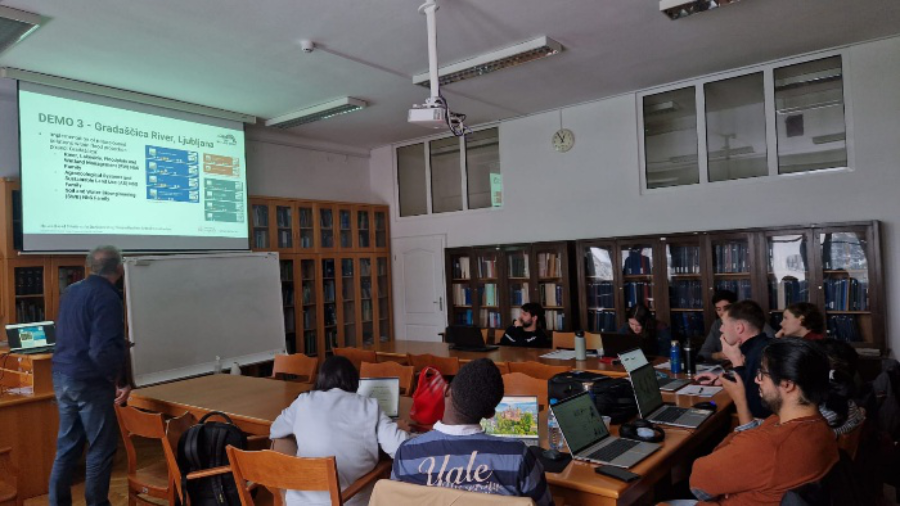
As part of the Erasmus Mundus "Flood Risk Management" Master Programme, students attending the "Socioeconomic Assessment of Flood Protection" course participated in an interactive lecture dedicated to the integration of Nature-based Solutions (NbS) into critical infrastructure.
Bringing Research to the Classroom
The lecture wasn't just about theory; it was a deep dive into the tangible outputs our project has developed over the past months. The session was structured to move from a high-level project introduction to hands-on technical application:
-
The NbS Framework: We explored the role of NbS in protecting infrastructure against climate hazards, specifically focusing on flood resilience.
-
Interactive Catalogue Activity: Using the NATURE-DEMO NbS Catalogue and Hazard Matrix, students engaged in a practical exercise. They selected hazards relevant to their own research interests and used our matrix to identify supportive Nature-based Solutions, exploring the detailed Factsheets we’ve developed.
-
Climate Data Visualization: Students were introduced to the European Climate Data Visualization tool, where they had the chance to "play with the data," selecting various European cities to visualize climate risks and potential impacts.
-
Real-world Application (Demo 3): To ground the theory in reality, we presented Demo 3, discussing its stakeholder mapping and the complex monitoring plan required to ensure success.


Why This Matters
This lecture represents a key milestone in our Dissemination and Exploitation strategy. By incorporating NATURE-DEMO materials into a prestigious Erasmus Mundus programme, we are ensuring that our project results—like the NbS Catalogue—are being used as educational tools for the flood risk managers of tomorrow.
Whether it is communication, dissemination, or exploitation, the goal remains the same: ensuring that Nature-based Solutions become a standard part of the engineering and socio-economic toolkit for climate adaptation.
Related
-
NATURE-DEMO Newsletter no. 9
Stay updated on how NATURE-DEMO is strengthening European infrastructure resilience against climate hazards. Explore our latest quarterly newsletters to discover key project milestones, field implementation updates across our demo sites, newly published scientific research, and upcoming events.
-
NATURE-DEMO Featured in ETR Journal: Nature-Based Solutions for Climate-Resilient Rail Infrastructure
The presentation highlighted how the catalogue can support the identification, selection, and implementation of NbS for climate resilience, sustainable infrastructure, and adaptation to natural hazards. It also provided an opportunity to discuss how NbS can be transferred into practical applications across different environments and communities.
-
NATURE-DEMO Research Highlighted at Sustainable Solid Waste Management Conference
The presentation highlighted how the catalogue can support the identification, selection, and implementation of NbS for climate resilience, sustainable infrastructure, and adaptation to natural hazards. It also provided an opportunity to discuss how NbS can be transferred into practical applications across different environments and communities.
-
NATURE-DEMO Dissemination at ICONHIC 2026 in Greece
The presentation highlighted how the catalogue can support the identification, selection, and implementation of NbS for climate resilience, sustainable infrastructure, and adaptation to natural hazards. It also provided an opportunity to discuss how NbS can be transferred into practical applications across different environments and communities.
-
NATURE-DEMO NbS Catalogue Presented at the University of Huddersfield
The presentation highlighted how the catalogue can support the identification, selection, and implementation of NbS for climate resilience, sustainable infrastructure, and adaptation to natural hazards. It also provided an opportunity to discuss how NbS can be transferred into practical applications across different environments and communities.