
DEMO 5
Globocica, N. Macedonia
Location of Globocica and Shpilje Dams
The Black Drim hydroelectric system consists of two dams, Shpilje and Globocica, which are located in the western part of North Macedonia on the Crn Drim River, about 30 km north of Struga.
The HPP Globocica is designed and constructed with installed capacity of 42 MW and annual generation of 180 GWh. The dam is rock filled with a height of 94.5 m. The accumulation has a volume of 55,300,000 m3 water, out of which the useful volume is 13,200,000 m3 water. The power house is located at the right bank of the river Crni Drim, at 7.8 km downstream of the dam, right upstream of the inflow of river Selecka.

HPP Spilje is the largest accumulative hydro power plant in the river basin of the river Crn Drim. With the commissioning in 1969 this hydro power plant is a relevant source for electric power in the Macedonian electric power system. HPP Spilje has accumulation with a volume of 506,000,000 m3 water, out of which the useful volume is 218,000,000 m3 water. The inflows from the Crn Drim River during the year are quite equable due to the existence of two accumulations upstream, the Globocica accumulation and Ohrid Lake.
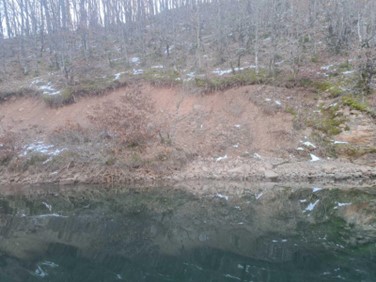
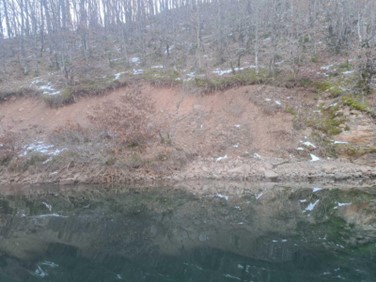
The region has experienced severe precipitation and drought events in the last years, attributed to climate change effects. In the aftermath, several landslides and rockslides were observed in the area.

Problem Description
The Black Drin Hydroelectric System, incorporating the Shpilje and Globocica Dams, encounters significant issues related to sedimentation, climate change, torrential riverbed activities, soil erosion, and landslides. Soil erosion particularly impacts accumulation embankments and hydropower facilities by filling reservoirs and reducing their volume, thereby shortening the exploitation period of the reservoirs. Climate change intensifies soil erosion and sedimentation by increasing the frequency of extreme weather events, leading to more intense torrential activities in riverbeds and fluctuating water flows.
Furthermore, a significant challenge arises during the warmer months when snow melts and during periods of heavy rainfall, particularly under changing climate conditions. During these times, substantial amounts of municipal waste and other solid refuse from these communities find their way into the reservoir. This poses a major operational issue for the Hydroelectric Power Plant, as it obstructs the supply tunnel. Also, it is a major issue for clean water supply.
Addressing these interconnected issues requires comprehensive environmental management and infrastructure resilience strategies that will be enabled with the realization of the Nature-Demo project. Demo-5 will analyze all proposals developed in Phase I and an adequate solution will be deployed for mitigation and rehabilitation of erosion and flood processes.
As a part of the demonstration site, Demo-5 will analyze all proposals developed in Phase I and an adequate solution will be deployed for mitigation and rehabilitation of erosion and flood processes. The case study will provide all necessary advantages and disadvantages and can be enhanced to be applied to other dam sides or replicas.